
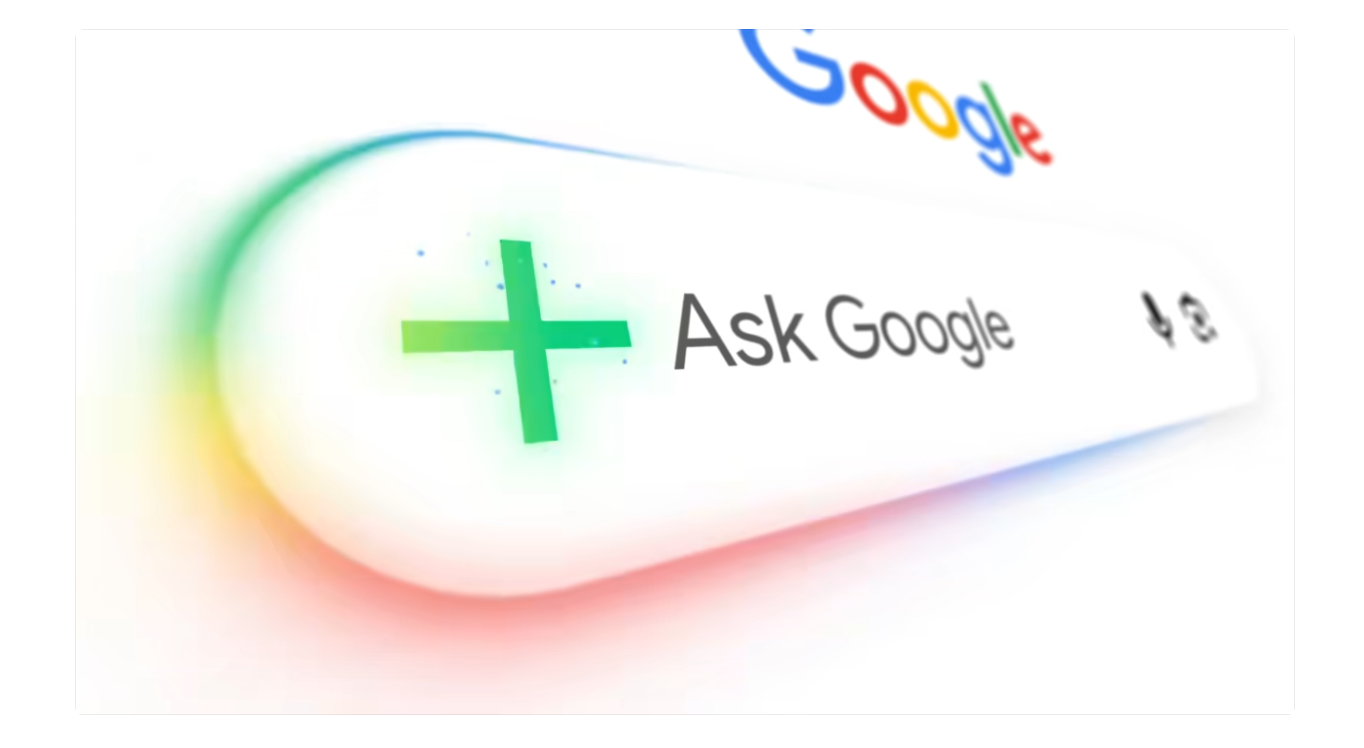
At Google I/O 2026, Google announced four transformative Search upgrades: Gemini 3.5 Flash as the new default AI Mode model, a completely redesigned intelligent Search box, AI information agents that monitor the web 24/7, agentic coding that builds custom tools inside Search, and expanded Personal Intelligence across 200 countries. AI Mode now has over one billion monthly users—and queries are more than doubling every quarter.
On May 19, 2026, Google's VP of Search Elizabeth Reid took the I/O stage and announced what she called the next chapter of Google Search. It wasn't incremental. The announcements signal a fundamental shift in how people find information—and by extension, how law firms need to show up online.
If you've been watching AI Mode climb from curiosity to mainstream, this is the moment it becomes the default. Here's a breakdown of every major announcement and what it means for criminal defense, personal injury, and family law firms competing in metro markets.
Source: A new era for AI Search, Google The Keyword, May 19, 2026 — by Elizabeth Reid, VP of Search.
Gemini 3.5 Flash Is Now the Default in AI Mode
Starting May 19, 2026, Google upgraded AI Mode's underlying model to Gemini 3.5 Flash—described as delivering sustained frontier performance for agents and coding tasks. This is no longer an experimental overlay on traditional Search. AI Mode is now powered by Google's most capable production model, available globally to every user.
The Search Box Got Its Biggest Upgrade in 25 Years
Google is rolling out a completely redesigned, AI-powered Search box—described as the most significant change to the Search interface in over a quarter century. The new box:
Dynamically Expands
The input field grows to accommodate complex, multi-sentence queries—eliminating the need to compress detailed questions into short keyword strings.
AI-Powered Suggestions
Instead of simple autocomplete, the box uses AI to help users formulate better questions—actively shaping the queries that reach your content.
Multimodal Input
Users can now search using text, images, files, videos, or even open Chrome tabs—significantly expanding the types of legal research queries possible.
Conversational Follow-Up
Users can ask follow-up questions directly from AI Overviews and flow into AI Mode seamlessly, with context preserved throughout the session.
Search Agents: The Web Is Now Being Monitored on Users' Behalf
This is the most significant announcement for legal marketing. Google is launching AI information agents—autonomous agents that run continuously in the background, 24/7, scanning the web for changes that match a user's specified criteria.
The agents monitor across everything: blogs, news sites, social posts, and real-time data streams including finance, shopping, and sports. When they detect relevant changes, they send synthesized, actionable updates directly to the user.
Google's examples included apartment hunting and sneaker drops—but the legal implications are immediate. A prospective client can now instruct an agent to notify them the instant a DUI attorney in their city offers a free consultation, or when family law resources mention their specific custody concern.
Google is also expanding agentic booking capabilities—allowing users to specify detailed criteria and receive direct booking options. For select service categories, Google will even call businesses on a user's behalf. Legal services aren't in the initial rollout, but the direction is clear.
Agentic Coding: Search Can Now Build Custom Tools on the Fly
Google is bringing agentic coding capabilities directly into Search, powered by Gemini 3.5 Flash and its Antigravity developer platform. Search can now generate custom generative UI—interactive layouts, simulations, tables, graphs—assembled in real time to match the specific question being asked.
More relevant for ongoing tasks: Search can build custom dashboards and trackers—described by Google as "mini apps"—for topics users return to repeatedly. These experiences are built fresh, pulling from live sources including maps, reviews, weather, and local data.
Personal Intelligence: AI Search Gets Personal
Google is expanding Personal Intelligence in AI Mode to nearly 200 countries across 98 languages—with no subscription required. Users can securely connect Gmail, Google Photos, and soon Google Calendar to AI Mode, allowing Search to incorporate personal context into responses. Users remain in control: connection is opt-in, and users choose what to share.
What Law Firms Need to Do Right Now
The I/O 2026 announcements aren't a future roadmap. AI Mode is live, has one billion users, and is the fastest-growing surface in Google's history. Information agents are launching this summer. Generative UI is arriving this summer. Personal Intelligence is already in 200 countries.
Structure Content for AI Retrieval
Your pages need clear entity signals, FAQ schema, and answer-dense sections. If AI can't extract a clean answer from your content, it won't cite you.
Answer Long-Tail, Layered Questions
The expanded Search box means users will ask more specific questions. Your content strategy needs to match that specificity—not just target broad keywords.
Invest in AEO Now, Before Agents Scale
Information agents will only surface firms already visible in AI Mode. Waiting until agents go mainstream means starting from zero on the wrong side of the shift.
Audit Your Schema and Entity Clarity
Google's AI models need to clearly understand who you are, where you practice, what areas you cover, and what makes you authoritative—before they'll recommend you.
Frequently Asked Questions
What did Google announce at I/O 2026 for Search?
What is AI Mode in Google Search?
How do Google's new AI information agents work?
What is Personal Intelligence in Google Search?
What does Google I/O 2026 mean for law firm SEO and AEO?
Is Your Law Firm Showing Up in AI Search?
Dashing Digital helps criminal defense, personal injury, and family law firms get found—and cited—in the AI-powered Search results that are replacing traditional rankings.
Request a Free Digital Marketing Audit
April Atwater
President & Founder — Dashing Digital MarketingWith 20 years of search experience, April leads a legal-exclusive digital marketing agency focused on SEO, AEO, and ORM for criminal defense, personal injury, and family law firms in competitive metro markets.
About April → · LinkedIn