
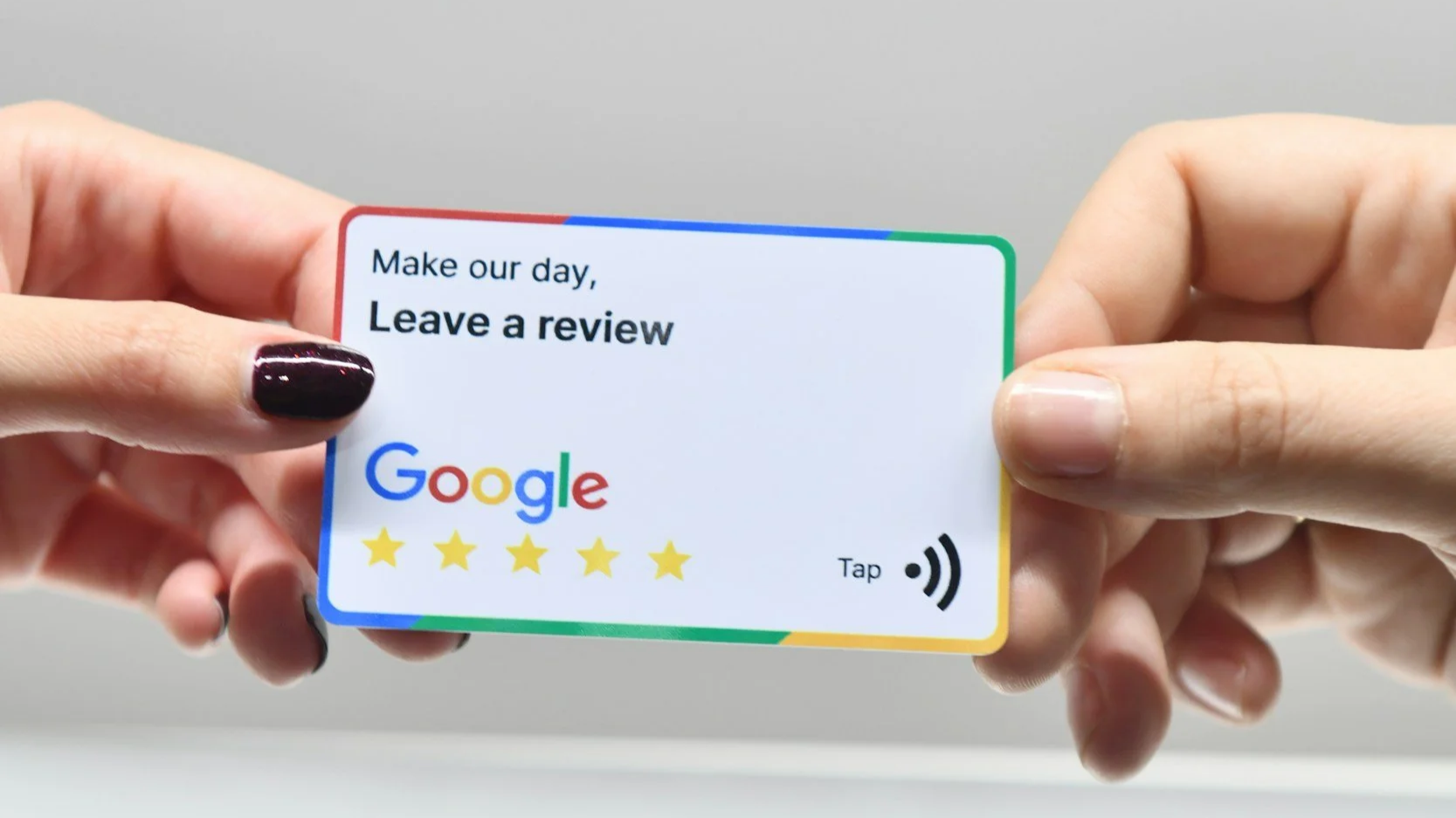

As of October 21, 2024, the FTC's Consumer Review Rule (16 CFR Part 465) makes it a federal violation for law firms to create, buy, sell, or knowingly use fake reviews — including AI-generated ones. Civil penalties reach $53,088 per violation. As of April 2026, the FTC has shifted from education to active enforcement, and law firms are not exempt.
If your firm has ever been tempted to buy reviews, offer a client discount in exchange for a 5-star rating, or let a paralegal post a glowing review without disclosing their connection — stop. And if you haven't been tempted yourself, ask the harder question: are you 100% certain your marketing team hasn't? Do you actually know how those five-star reviews are being generated on your behalf?
What you don't know can still cost you. And the FTC is no longer issuing gentle reminders. For law firms relying on online reputation management as part of their growth strategy, the rules of the game just changed.
What the FTC Rule Actually Says
The FTC finalized its Consumer Review and Testimonials Rule on August 14, 2024. It went into effect October 21, 2024 — and it gave the agency something it didn't have before: the authority to seek civil penalties against businesses that game the review system.
Before this rule, the FTC could issue cease-and-desist letters and pursue enforcement under Section 5 of the FTC Act, but a 2021 Supreme Court decision in AMG Capital Management LLC v. FTC stripped the agency of its ability to obtain monetary relief in most circumstances. The Consumer Review Rule restored that power — specifically for fake reviews, paid testimonials, and review suppression.
The result: a federal regulation with real teeth, applied directly to the platforms law firms rely on most heavily — Google, Yelp, Avvo, and other review sites that drive client acquisition. For firms investing in SEO for law firms, reviews are now both a ranking signal and a federal compliance issue.
From Rule to Enforcement: The Timeline
The Rule Is Finalized
The FTC adopts the Consumer Review and Testimonials Rule on a 5–0 vote, codifying six categories of prohibited conduct involving online reviews and testimonials.
The Rule Takes Effect
16 CFR Part 465 becomes enforceable. The FTC spends the first year setting expectations, monitoring complaints, and letting the enforcement pipeline mature.
First Enforcement Sweep
The FTC issues warning letters to 10 unidentified companies, demanding written confirmation of corrective action within five business days. Christopher Mufarrige, Director of the FTC's Bureau of Consumer Protection, signals the agency is committed to ensuring companies comply with the Rule.
Enforcement Becomes a Priority
Major law firm advisories confirm the FTC has shifted from guidance to active enforcement, targeting both company-wide policies and individual deceptive posts. Civil penalties are now in play.
The Six Prohibited Practices
The Consumer Review Rule identifies six specific categories of conduct that are now federally illegal. Law firms — especially those in competitive metro markets where reviews drive intake — should evaluate each one carefully.
1Fake or AI-Generated Reviews
Creating, buying, or disseminating reviews from people who don't exist or who never used your services. This explicitly includes AI-generated reviews — a major issue as generative tools make it easier than ever to produce convincing fake testimonials at scale.
16 CFR § 465.22Sentiment-Based Incentives
Offering compensation, discounts, gift cards, or any incentive conditioned on a review expressing a particular sentiment — positive or negative. "Leave us a 5-star review and get $25 off your next consultation" is now a federal violation. Even implied conditioning counts.
16 CFR § 465.43Undisclosed Insider Reviews
Reviews from officers, managers, employees, or their immediate family that don't clearly disclose the relationship to the firm. The disclosure must be conspicuous — buried small print won't satisfy the rule.
16 CFR § 465.54Fake Independent Review Sites
Misrepresenting that a website you control offers independent reviews of your firm or your competitors. This applies to "best lawyer" directories or reputation sites secretly operated by the firm being reviewed.
16 CFR § 465.65Review Suppression
Using legal threats, intimidation, or false accusations to suppress honest negative reviews. Selectively displaying only positive reviews on your own website while hiding negatives is also prohibited.
16 CFR § 465.76Fake Social Media Indicators
Buying bot-generated followers, likes, or views to inflate perceived influence. If you've ever paid a vendor to "boost engagement," you should know exactly what they're doing.
16 CFR § 465.8Why Law Firms Are Especially Exposed
Online reviews drive a disproportionate share of legal client acquisition. For criminal defense, personal injury, and family law in particular, prospective clients are often making high-stakes decisions under emotional pressure — and Google reviews are frequently the deciding factor between two firms with similar credentials.
That pressure has historically pushed some firms (and their marketing vendors) toward shortcuts. Common practices that are now federal violations include:
- Paying review-generation services that submit reviews from people who never engaged the firm
- Asking employees, paralegals, or interns to leave 5-star reviews without disclosure
- Offering case discounts, gift cards, or referral bonuses tied to leaving a positive review
- Sending DMCA takedowns or threatening defamation suits to pressure removal of legitimate negative reviews
- Using AI tools to generate reviews "in the voice of" satisfied clients
- Buying bot-generated followers on LinkedIn, Instagram, or YouTube to appear more authoritative
And here's the part most firms miss: your marketing vendor's conduct can become your liability. The FTC has explicitly stated that companies can be held liable for fake reviews, review suppression, or artificial engagement carried out by third parties acting on their behalf — regardless of contractual disclaimers.
The Ethics Layer (Because It's Not Just the FTC)
Federal civil penalties are only one piece of a law firm's exposure. Attorneys are also bound by state bar rules of professional conduct — most of which prohibit false or misleading communications about legal services (Model Rule 7.1) and impose duties around supervision of nonlawyer assistants (Model Rule 5.3).
A fake Google review or an undisclosed insider testimonial isn't just an FTC violation — it's potentially a Rule 7.1 problem, a Rule 5.3 supervision failure, and in some jurisdictions, grounds for a bar complaint. The same conduct can generate concurrent federal civil penalties and state disciplinary action.
For firms operating in competitive metros — Phoenix, Las Vegas, Salt Lake City, Denver, Houston, Atlanta — where review velocity has historically been a competitive battleground, this layered exposure is significant.
What Your Firm Should Do Now
Compliance is not complicated, but it does require a deliberate audit. Here's the prioritized action list every law firm should run through this quarter:
1. Audit your existing review profile
Pull a list of every review on your Google Business Profile, Yelp, Avvo, and any other platform you actively monitor. Flag any reviews from current or former employees, family members, or anyone with a documented relationship to the firm. If those reviews don't include disclosure, you need to either add disclosure or report them for removal. A structured online reputation management process for law firms makes this systematic rather than reactive.
2. Kill any sentiment-based incentive program
If your firm offers any reward, discount, or perk in exchange for a review — and it's expressly or implicitly tied to leaving a positive one — restructure it immediately. Neutral requests for honest feedback are still permitted. "Tell us about your experience" is fine. "Tell us how much you loved working with us for 10% off" is not.
3. Rewrite your review request templates
Many firms use intake or post-case email sequences with language that subtly conditions a positive review. Have your templates reviewed by counsel and your marketing partner against the FTC rule. Phrases to flag and remove include "show us some love," "share your 5-star experience," and "if you were happy, would you mind…"
4. Establish clear disclosure protocols for staff
Document your firm's policy on staff reviews and endorsements. The default should be that employees do not review their own employer publicly. If they do, the disclosure must be clear and conspicuous — for example, "I'm a paralegal at this firm" stated plainly within the review text itself.
5. Vet your marketing vendors
Ask your SEO, ORM, and digital marketing vendors directly: How are reviews being generated? Are any reviews coming from bot networks, click farms, or AI tools? What is your protocol for handling negative reviews? Get their answers in writing. If a vendor cannot or will not provide transparency, that is your warning sign.
6. Build an SEO-and-AEO compliant reputation strategy
The firms that will win in 2026 and beyond are not the ones with the most reviews — they're the ones with the most authentic reviews, properly schema-marked up on their own sites, displayed transparently, and supported by an AEO-optimized presence that demonstrates real client outcomes. Authentic reputation is now a competitive moat.
Is your firm's review profile compliant — and competitive?
Dashing Digital Marketing offers a complimentary Google Review & ORM compliance audit exclusively for law firms. We'll examine your current profile, identify exposure points under the FTC rule, and map a strategy that protects your firm and outperforms your competitors.
Book Your Free Audit →How This Connects to SEO and AEO
Compliance isn't just a defensive play — it's a competitive one. Google's algorithm has become increasingly sophisticated at detecting inauthentic review patterns, and AI search engines like ChatGPT, Perplexity, and Google AI Overviews are now pulling reputation signals when generating answers about law firms. Understanding the distinctions between SEO, AEO, AIO, and GEO is now essential to navigating this layered landscape.
When a prospective client asks an AI assistant "who is the best DUI attorney in Phoenix," that engine is synthesizing reviews, citations, and authority signals. Firms with patterns suggesting fake reviews — sudden review velocity spikes, suspiciously similar language, or low-quality reviewer profiles — are increasingly being filtered out of those AI-generated recommendations. This is exactly why AEO (Answer Engine Optimization) has emerged as a critical competitive layer separate from traditional SEO.
In other words: clean reputation isn't just FTC compliance. It's also the foundation of strong AEO and long-term organic visibility. The firms that treat their Google reviews as a legitimate trust signal — because they are one — will have the competitive advantage as enforcement ramps up and AI search continues to mature.
The Bottom Line
The FTC has made its position clear: reviews must reflect real client experiences. Period. There is no longer a gray area for "everyone does it" or "our agency handles that." Federal civil penalties are now in play, third-party vendor conduct is your firm's liability, and state bar disciplinary exposure layers on top.
The good news: firms that operate cleanly already have a structural advantage. The competitors who relied on fake reviews to inflate their visibility are now facing exposure that didn't exist 18 months ago. For ethical firms, this is an opportunity — not a threat.
Audit your review profile. Vet your marketing vendor. Document your processes. And build a reputation strategy that holds up under federal scrutiny and outperforms in AI search. If you want a fast starting point, Dashing Digital's free AEO audit tool for lawyers shows where your firm currently stands in AI-generated search results.
Frequently Asked Questions
Are fake Google reviews illegal for law firms?
Yes. As of October 21, 2024, the FTC's Consumer Review Rule (16 CFR Part 465) makes it a federal violation to create, buy, sell, or knowingly disseminate fake reviews — including AI-generated ones. Civil penalties can reach $53,088 per violation.
Can law firms offer clients incentives in exchange for Google reviews?
Not if the incentive is conditioned on the review being positive. The FTC prohibits offering compensation, discounts, gift cards, or other incentives in exchange for reviews expressing a particular sentiment — even by implication. A neutral request for honest feedback is permitted; "leave us a 5-star review and get $25 off" is not.
Do law firm employees need to disclose when they leave reviews?
Yes. Reviews from officers, managers, employees, and their immediate family must include a clear and conspicuous disclosure of the relationship to the firm. Failure to disclose is a violation, even if the firm did not expressly solicit the review.
Can law firms be held liable for what their marketing agency does?
Yes. The FTC has confirmed that advertising agencies, PR firms, and reputation management vendors can be held liable under the Rule. More importantly, the firm itself can be held liable for fake reviews, review suppression, or artificial engagement carried out by third parties acting on its behalf — regardless of contractual disclaimers.
Is it legal to remove or hide negative reviews from a law firm's Google profile?
It depends. Reporting reviews that violate Google's policies (defamatory, fake, off-topic) is permitted. However, the FTC prohibits using legal threats, intimidation, or false accusations to suppress honest negative reviews. Selectively displaying only positive reviews on your own website while suppressing negatives is also prohibited.
What is the penalty for a law firm violating the FTC fake review rule?
Civil penalties can reach up to $53,088 per violation under the current 2025 inflation-adjusted amount, with annual upward inflation adjustments. The FTC has stated that violations can quickly add up — and law firm advisories interpreting the FTC's December 2025 warning letters note that the agency appears to be targeting both company-wide policies and individual deceptive posts.
Sources & Further Reading
- Federal Trade Commission. "Federal Trade Commission Announces Final Rule Banning Fake Reviews and Testimonials," August 14, 2024.
- Federal Trade Commission. "The Consumer Reviews and Testimonials Rule: Questions and Answers," Bureau of Consumer Protection.
- Federal Trade Commission. "A warning letter (or ten) for businesses: comply with the FTC's Consumer Review Rule," December 22, 2025.
- Federal Trade Commission. "Endorsements, Influencers, and Reviews," FTC Business Guidance.
- 16 CFR Part 465 — Rule on the Use of Consumer Reviews and Testimonials.

